


Money grows like anything else: the earlier you plant it, the bigger it gets. Nothing about it is simple though, so let’s break it down.
Prepare the Soil First
Before you plant your money to grow, you need to clear and prepare the ground. Start by paying off any high interest debt, since it competes with your investments for room to grow.
You'll also want an emergency fund you can rely on. Many investments take time to sell and turn into cash, and some, like locked in GICs, can't be touched until they mature, so keep a reserve handy.
Age of Majority
For young people, age is key. Parents can start earlier on a child’s behalf, through an RESP or in trust account. But to open an account yourself, you must reach the age of majority, old enough to sign a contract. That differs by province:
When is RRSP and TFSA room earned? In Canada, RRSP room starts building with your first job, based on your earned income. TFSA room is granted on January 1 of the year you turn 18. So when you open your first RRSP and TFSA, you likely already have room. Regardless of age, it’s best to confirm your room with CRA (myCRA).
Power of Compounding
When your money is invested, it can grow in value over time. But it can also lose value, especially short term. That up and down movement, called volatility, is a normal part of investing. Markets have historically trended upward over the long term, making compounding possible.
Say you invest $1,000 and it grows 4% in a year, bringing its value to $1,040. The next year, that same 4% applies to the larger amount, and the cycle continues. This is a simplified example. Real returns don’t move in a straight line, and some years will be negative. But compounding still works, it just needs time.
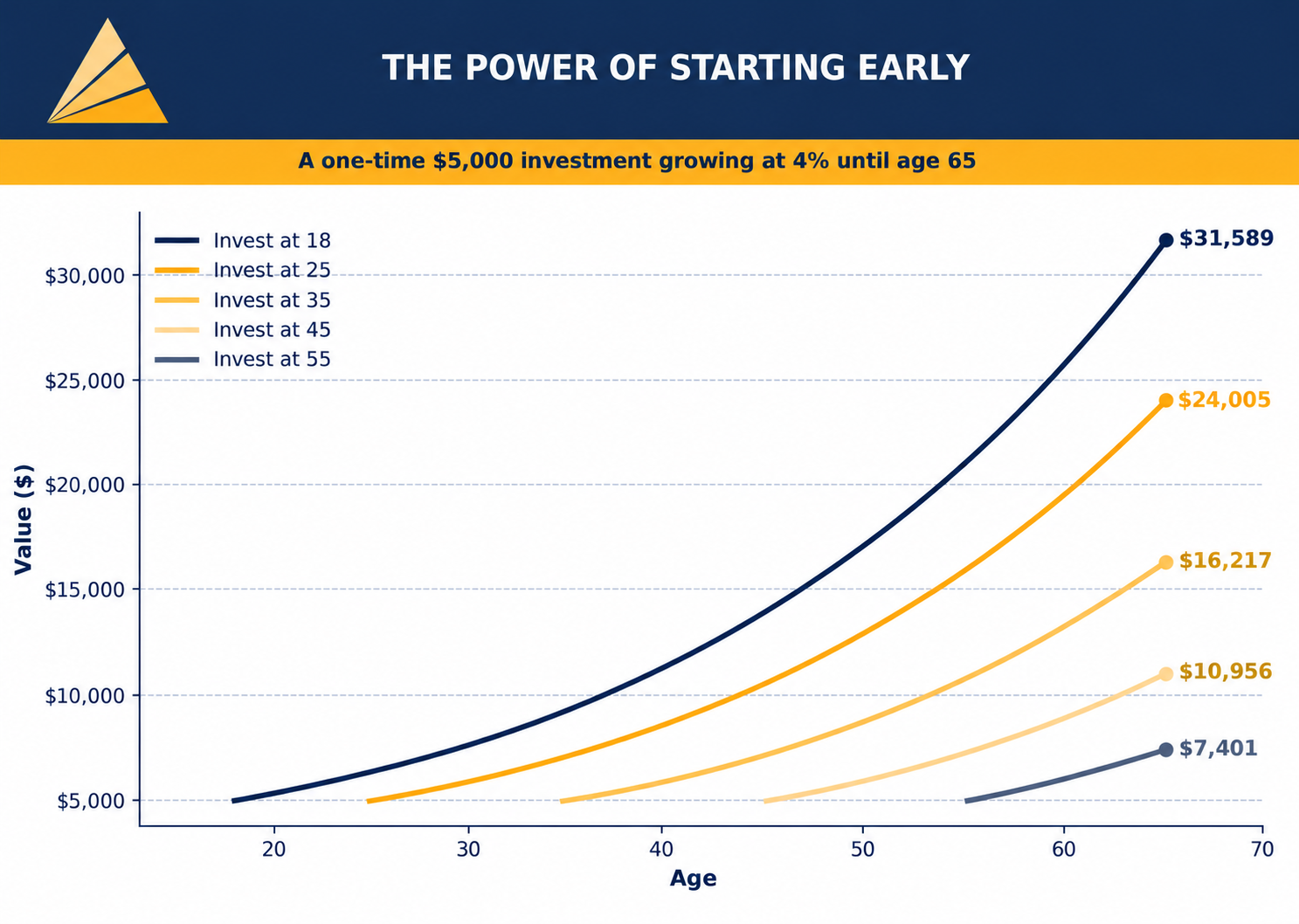
The earlier you invest, the more years you give it. Additionally, regular contributions and reinvesting dividends or interest adds even more fuel to the cycle. Investing early also gives your investments more time to recover from weak years. And in a TFSA or RRSP, that growth is tax free or tax deferred, so more stays invested and keeps compounding. You also want to ask about fees. Fees work the opposite way. It’s normal to pay fees for service, but you want to make sure they’re not eating into your returns.
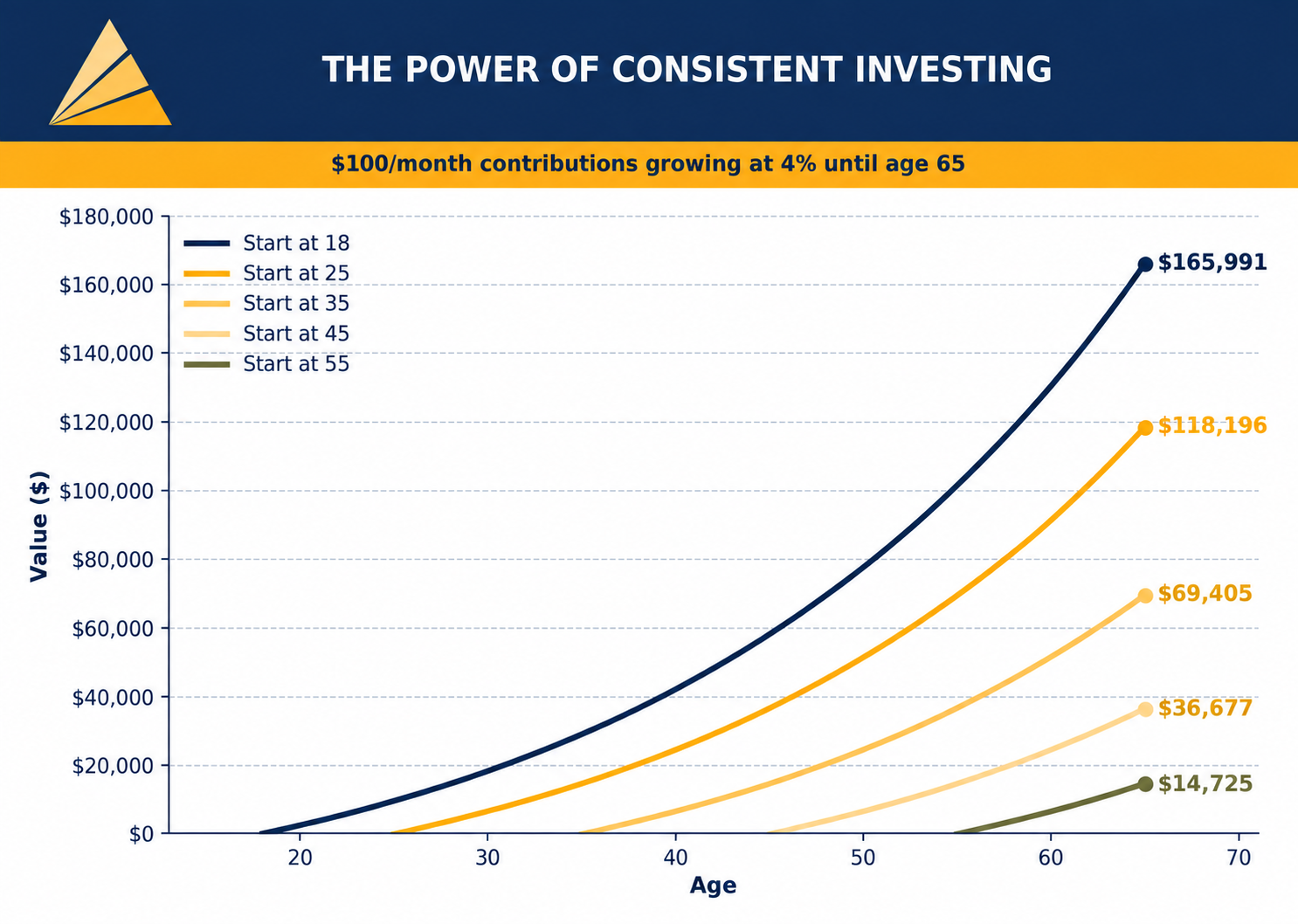
So, when should you start investing? Now. Every year you wait is a year of growth you can’t get back, and the earlier you start, the more time compounding has to work in your favour.
Ready to talk through your options? Contact KLT Wealth Management.
Courtney Beach, QAFP
This article is for general information only and does not constitute personalized investment advice; the example shown is hypothetical, and past performance is not indicative of future results.
